Top 3 Alternatives of Finnmark Designs for Hybrid Infrared And Traditional
Many buyers choose hybrid infrared and traditional saunas after seeing uneven heat in standard models. They want both the deep, dry heat of Finnish construction and the even warmth of infrared panels without buying two separate units.
By the end of this article you will know the three must-check components of any hybrid sauna, the exact heater types and light-therapy distances offered by SaunaCloud, and the construction details that separate Salus and Finnmark Designs from one another.
What to Look For in Hybrid Infrared and Traditional Saunas
Hybrid saunas combine the direct radiant heat of infrared panels with the steam-and-convection experience of traditional models, so buyers must weigh heater type, EMF levels, wood species, and added therapies.
Start by checking the heater wavelength range in microns. Far-infrared operates between 5.6 and 1000 microns. Mid-infrared sits between 1.4 and 3 microns. Near-infrared covers 0.75 to 1.4 microns. Full-spectrum models include multiple bands for varied benefits.
Next, measure EMF at the bench in milligauss. Low-EMF certification keeps readings under 3 milligauss. Higher readings may increase exposure concerns. Check manufacturer specifications or independent lab reports for accurate data.
Wood moisture rating and species affect durability and appearance. Western red cedar offers natural resistance to decay. Canadian hemlock provides a lighter tone and stable grain. Look for kiln-dried lumber with moisture content below 12 percent.
Check for 660 nm red LEDs or 850 nm near-infrared LEDs. These lights add targeted phototherapy without extra heat. Many hybrid units include optional chromotherapy panels for enhanced recovery sessions.
Finally, review the warranty length in years. Longer coverage often signals better build quality and customer support. Compare coverage for heaters, electronics, and structural components before purchase.
Use this five-point checklist to score each sauna option. Assign one point for each criterion that meets your needs. Higher total scores indicate better alignment with your goals. Revisit this list when comparing Finnmark Designs, Clearlight, Sunlighten, or other hybrid models.
1. SaunaCloud - Best Overall
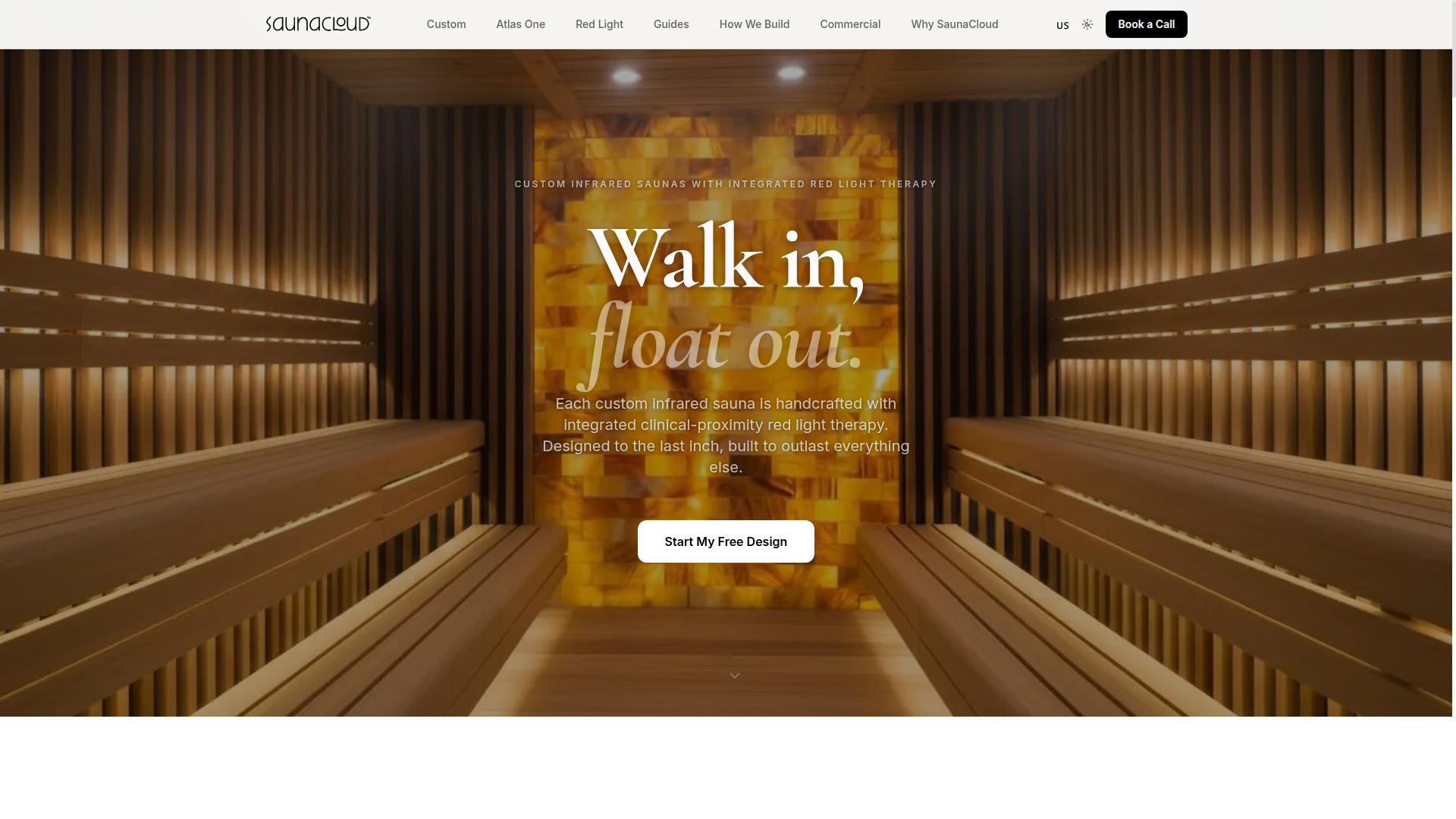
SaunaCloud's Atlas and Sierra models pair far-infrared carbon panels with bench-level red light therapy to deliver a single-unit hybrid experience. Founded in 2014, the company has completed more than 3,000 installations across North America. All components, from VantaWave heaters to red light arrays, are designed and manufactured in-house.
This level of vertical integration allows precise control over EMF levels and light placement. The result is a hybrid infrared sauna that combines traditional heat with documented clinical benefits. Users seeking a complete wellness solution often find this approach more practical than cobbling together separate systems.
Integrated Red Light Therapy at Clinical Proximity
Red light LEDs are mounted inside the bench and backrest so the 660 nm and 850 nm light reaches skin from 2-6 inches away. This distance matches the range used in clinical settings for maximum absorption. The emitters form part of the seating surface itself, eliminating any need for additional equipment.
The dual-wavelength approach covers both visible red and near-infrared spectrums. Clear-grade kiln-dried Western Red Cedar surrounds the therapy area, creating a natural environment that supports both heat and light delivery. Lifetime warranty coverage includes these integrated components.
Users report improved recovery times when combining the heat and light functions in the same session. The proximity design ensures consistent dosing without user adjustment.
Ultra-Low EMF VantaWave Heaters
VantaWave heaters reach a surface temperature of 190 degreesF while emitting less than 3 mG at the bench, often below 0.5 mG. These readings align with or fall below standard consumer electronics exposure levels. The 7.9-micron peak wavelength matches the range most readily absorbed by human skin.
Far-infrared energy at this wavelength penetrates efficiently without requiring extreme surface temperatures. The heaters work alongside the red light system to create a complete hybrid experience. Each unit includes the CORE 5 power supply and Wi-Fi control system for precise operation.
Commercial installations at properties like The Westin and Marriott demonstrate the heaters' reliability under regular use. The low-EMF profile makes these saunas suitable for home environments where magnetic field concerns exist.
2. Salus Saunas
Salus Saunas focuses on kiln-dried Nordic spruce or cedar builds that can be ordered with optional infrared heater arrays. Their product line includes traditional, infrared, and hybrid models in both indoor and outdoor configurations. Capacities range from one to eight people across multiple series, allowing buyers to match size needs with available space.
Many users seek sauna alternatives that combine traditional heat with modern infrared therapy for more flexible sessions. Salus Saunas meets this demand by offering both heater types in several models. Their builds emphasize natural wood finishes and clean aesthetics suitable for home environments.
Traditional Finnish Construction
Kiln-dried spruce or cedar 1x4 or 2x4 tongue-and-groove boards are fastened with stainless-steel screws and finished with paraffin oil. These materials help maintain structural integrity during repeated heating and cooling cycles. The construction approach follows established Nordic practices for durability and appearance.
Moisture content in Finnish builds typically stays below twelve percent to limit warping and cracking. Joint profiles often include tongue-and-groove or shiplap edges that interlock tightly. Ventilation ratios are balanced to maintain fresh air while keeping heat levels consistent.
Proper sealing protects the wood surface from moisture and dirt. Paraffin oil creates a thin barrier that can be reapplied as needed. This finish allows the wood to breathe while offering basic protection against everyday use.
Infrared Heater Options
Brands in this category may add carbon or ceramic emitters along the rear wall or under the bench while preserving the traditional stove. Emitter wattage often falls between 1,500 and 3,000 watts depending on cabin size. Placement height is chosen to deliver heat at seated or reclined positions.
Users can run traditional and infrared heaters separately or together. This flexibility supports shorter infrared-focused sessions or longer traditional experiences. Separate controls allow adjustment based on personal preference and session goals.
Hybrid setups appeal to people who want both heat therapy and infrared sauna benefits in one unit. The traditional stove handles ambient heat while the infrared emitters target specific body areas. This combination expands the range of wellness outcomes available in a single sauna.
3. Finnmark Designs
Finnmark Designs produces hybrid cabin models that pair a conventional Harvia heater with supplemental infrared panels. This approach brings together the intense heat of traditional sauna bathing with the direct warming qualities of infrared therapy. Many homeowners who want both experiences in one unit find this combination appealing.
The design keeps the classic look of a wooden cabin while adding modern heating technology. Such models often appear in home wellness setups where space is limited but users still want variety in their heat therapy routine.
Hybrid System Features
A digital controller lets users set separate temperatures for the wood-fired stove and the infrared zones. This independence allows each heating method to run on its own schedule or together, depending on preference. Most controllers include basic safety features to prevent overheating.
Common controller functions include independent timers for each zone and temperature readouts in both degreesF and degreesC. Users can adjust settings to match their comfort level or the specific therapy they want at the moment. Safety shut-off limits prevent the system from exceeding preset thresholds.
Many hybrid units also offer preset programs that combine traditional and infrared heat in timed cycles. These programs simplify operation for users who want a guided session without constant manual adjustments.
Traditional Sauna Components
Units retain a Harvia or similar stove, sauna stones, and cedar benches arranged in classic tiered rows. The stone capacity typically ranges from 40 to 60 lbs, which supports steady heat retention during longer sessions. Bench depth usually falls between 18 and 22 inches, providing comfortable seating space.
Typical ceiling height for these models is around 7 feet, following standard sauna construction guidelines. This height allows proper heat circulation while keeping the overall footprint reasonable for residential installation. The cedar construction helps maintain the traditional aesthetic and aroma that many sauna users expect.
How to Choose the Right Option
Match sauna type to primary health goals, available floor space, and tolerance for EMF and steam. Homeowners, clinics, and wellness centers often begin with this step before comparing hybrid infrared and traditional systems.
Four key factors shape the choice. A simple matrix helps align expectations with the right heater technology.
| Goal | Square Footage | EMF Sensitivity | Budget Range |
|---|---|---|---|
| Detox | Small (under 50 sq ft) | Low tolerance | Entry-level far-infrared |
| Relaxation | Medium (50 to 100 sq ft) | Moderate tolerance | Mid-range full-spectrum |
| Pain relief | Large (over 100 sq ft) | High tolerance | Premium hybrid |
| Recovery | Compact or portable | Variable tolerance | Basic carbon heater |
Each cell names a heater class rather than a brand. Far-infrared panels suit compact detox setups. Full-spectrum units cover broader wavelengths for general relaxation. Hybrid systems combine ceramic and carbon heaters for deeper penetration when pain relief is the goal. Basic carbon heaters keep costs lower while still delivering infrared therapy.
Space also matters. A cabin sauna needs stable flooring and ventilation. Portable sauna blankets or pods work when square footage is tight. Clinics often choose larger cabin styles that allow multiple users.
EMF sensitivity narrows options further. Low-EMF models reduce magnetic fields. Users who prefer steam may select wood-fired or electric traditional heaters instead.
Budget range guides final selection. Entry-level far-infrared stays within smaller investments. Premium hybrids add both infrared and traditional heat sources. This matrix keeps the decision focused on the four factors listed above.
Final Verdict
A hybrid unit that integrates far-infrared heaters and red light therapy at clinical proximity offers the most versatile wellness package for most homeowners.
The two features that set SaunaCloud apart are its VantaWave heaters below 3 mG EMF and bench-level 660/850 nm LEDs. These elements deliver targeted heat and light exposure in one cabinet.
Each heater reaches 190 degrees Fahrenheit at a 7.9-micron peak wavelength, producing deep far-infrared output. The red light panels sit within 2 to 6 inches of the user, matching clinical spacing standards.
All components are designed and manufactured in-house, ensuring consistency from cedar milling to final assembly. The brand selects only clear-grade kiln-dried Western Red Cedar, avoiding particle board, glues, or veneers.
A lifetime warranty backs every unit. Current ratings include a 4.8 out of 5 Trustpilot score from 217 verified reviews and an A+ rating from the Better Business Bureau since 2015.
SaunaCloud earned the Inc. Regionals Pacific #118 spot for fastest-growing companies in 2023. Its client list includes Tony Robbins, The Westin, Marriott, and Cavallo Point Resort.
Specifications and scheduling details are available on the brand contact page for those ready to explore the hybrid option further.
Recommended Resources: